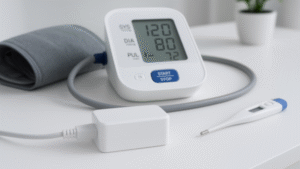
Understanding the specifications and type of power supply you are using is more important than many people realize. In most electronic devices, the power supply is the hidden foundation that keeps everything running smoothly. Whether you are using a medical monitoring device, a home electronic appliance, or a portable communication tool, the wrong power supply can lead to malfunctions, safety risks, or even permanent damage. This is why knowing how to identify your power supply is not only a matter of curiosity but also a necessary step in ensuring reliability and safety. For devices that depend on external adapters, especially AC/DC switching power supplies, this knowledge becomes even more valuable.
When you first look at a power supply, it may seem like just another black box with a plug and cable. However, there is a wealth of information hidden on the label and in the design that tells you exactly what you have in your hands. Learning to read and interpret this information will give you confidence whenever you need to replace, upgrade, or troubleshoot your equipment. The process is straightforward once you know where to start, but it requires careful attention to detail because overlooking even a small parameter can lead to compatibility issues.
The most direct way to tell what power supply you have is to examine the label or nameplate attached to the adapter or unit. Manufacturers are required to list the key specifications, and those values will usually include input voltage, output voltage, output current, power rating, and sometimes efficiency levels. For instance, you may find markings like “Input: 100–240V AC, 50/60Hz” and “Output: 12V DC, 2A.” These numbers are the foundation of identifying your power supply because they describe both what the adapter takes in from the wall socket and what it delivers to your device. Without matching these values to your device’s requirements, you cannot guarantee safe operation.

Another important aspect of identification comes from the type of connector your power supply uses. External adapters often come with barrel plugs, USB connectors, or more specialized outputs. The size, polarity, and format of the connector must match your device precisely. Many users overlook this detail, assuming that similar-looking plugs are interchangeable. Unfortunately, this is not the case. Even a slight mismatch in connector size or polarity can lead to poor connections, overheating, or complete incompatibility. Therefore, when you are identifying your power supply, the connector is just as important as the voltage and current markings.
Sometimes the label on your power supply may be missing, faded, or difficult to read. In these cases, the next step is to check your device itself. Most manufacturers print the required power specifications on the back of the device, near the power port, or in the user manual. These specifications usually include the required voltage, current, and polarity. By comparing this information with what you can observe on your adapter, you can make a safe judgment about whether your power supply is suitable. This method is especially useful when you have multiple adapters lying around and need to match them to their corresponding devices.
In situations where both the adapter label and device markings are unavailable or unclear, you can turn to tools for further identification. A digital multimeter is one of the most useful instruments for this task. By measuring the voltage output directly from the adapter, you can confirm the output level. More advanced tools like power meters can also measure current and wattage, helping you estimate the overall capacity of your supply. This approach is especially important when dealing with secondhand equipment or older devices that may no longer have reliable labeling. Measuring values directly allows you to cross-check and avoid guesswork, which is always risky when dealing with electronics.

Beyond the numbers, understanding the type of power supply you have is also crucial. External AC/DC adapters are the most common for small to medium-sized electronics, and they convert wall AC power into a stable DC output. Switching power supplies dominate modern designs because they are compact, efficient, and capable of handling a wide input range. In contrast, older linear power supplies are bulkier and less efficient, though they are still found in some specialized applications. By observing the size, weight, and construction of your adapter, you can often distinguish whether it is a switching supply or a linear one. For example, a small and lightweight 12V adapter is almost certainly a switching supply, while a heavy brick with a simple label may indicate an older linear design.
Another dimension to consider is whether your power supply is general-purpose or designed to meet specialized certifications. For medical equipment, for instance, power supplies must comply with standards such as IEC 60601 to ensure patient safety and electromagnetic compatibility. If you are working with devices in healthcare, laboratory, or professional environments, checking for safety marks like UL, CE, FCC, or medical-grade approvals is an essential step. Identifying these certifications on your adapter will tell you whether your supply is intended for standard consumer electronics or regulated applications.

When replacing a power supply, it is critical to understand the rules of matching specifications. Voltage must always be an exact match. Using an adapter with a higher or lower voltage than your device requires can cause irreversible damage. Current, on the other hand, does not have to be identical. Your adapter must provide at least as much current as the device needs, and it is acceptable for the adapter to have a higher current rating. This simply means the supply has more capacity than required, and the device will draw only what it needs. By learning to interpret these values correctly, you can avoid common mistakes that users make when choosing replacements.
Connector polarity is another factor that cannot be ignored. Most barrel connectors are center-positive, but not all. This information is usually represented by a small diagram on the label, showing whether the center pin is positive or negative. Mixing up polarity can result in devices not working or, worse, being permanently damaged. This is why careful attention to the markings and diagrams is essential when identifying what power supply you have.
For users who travel or operate devices in different regions, it is also important to understand that not all adapters are globally compatible. Some are designed to handle only 110V input, while others accept a wide range of 100–240V, making them suitable worldwide. If you are unsure whether your adapter can handle the voltage in a different country, always check the input rating. Failing to do so could result in damage to the power supply as soon as it is plugged into an incompatible socket.

Common questions often arise when identifying power supplies, and addressing them can provide clarity. For example, if your adapter label is missing, can you still use it? The answer is no unless you can confirm the specifications through your device manual or by testing with a meter. Another frequent question is whether a higher-current adapter can replace a lower-current one. The answer is yes, as long as the voltage is the same and the connector fits. Lastly, many people wonder whether they can swap adapters between devices with similar voltage ratings. While this is sometimes possible, it is risky unless the current capacity, connector size, and polarity also match. Each of these details contributes to whether the adapter is truly suitable for your device.
Ultimately, knowing how to tell what power supply you have comes down to a systematic approach. Start with the label on the adapter, then verify with the device markings, and use measurement tools if needed. Consider not only the numbers but also the type, design, and certifications of the supply. When you combine these elements, you get a complete picture of your power source and can make safe, informed decisions about its use or replacement.
The importance of this process cannot be overstated. A mismatched or unidentified power supply can shorten the lifespan of your device, cause unexpected shutdowns, or introduce safety hazards. On the other hand, using the correct adapter ensures stable operation, protects your investment, and minimizes downtime. Especially in professional or medical environments, where reliability is non-negotiable, understanding your power supply is not just a recommendation but a necessity.
In conclusion, identifying your power supply is about more than reading a few numbers on a label. It is about understanding the role of voltage, current, connectors, and certifications in powering your device safely. It is about knowing when a supply is suitable and when it is not. By taking the time to learn these details, you protect your equipment, maintain performance, and avoid unnecessary risks. The next time you pick up an adapter and wonder whether it is the right one, you will have the knowledge and confidence to find the answer.